We expect to open applications for Summer 2027 by November 30th, 2026!
About our REU
The GVSU REU Site, "Research Experience for Undergraduates Intersecting Computing and Evolution," will run from 2027–2029 and is funded by the U.S. National Science Foundation.

Who we are

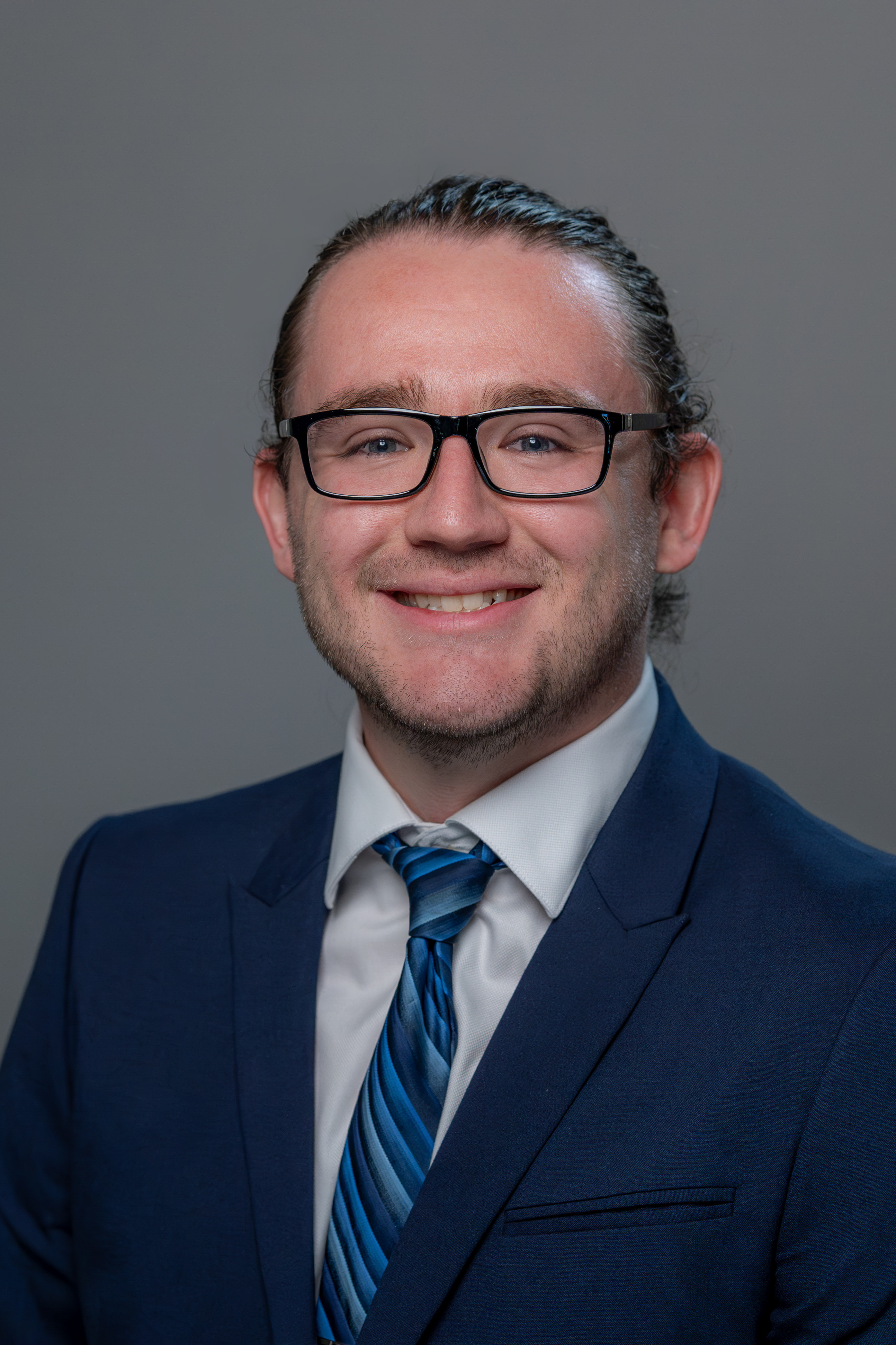
Dr. Erik Fredericks
(Primary Investigator) Dr. Erik Fredericks an Associate Professor of Computer Science at Grand Valley State University. His research focuses on exploring how uncertainty can impact self-adaptive systems at different levels of abstraction and how it can be mitigated by using search-based software engineering techniques. Recent works focus on uncertainty applied to generative art, procedural content generation, and robotics.
Dr. Austin Ferguson
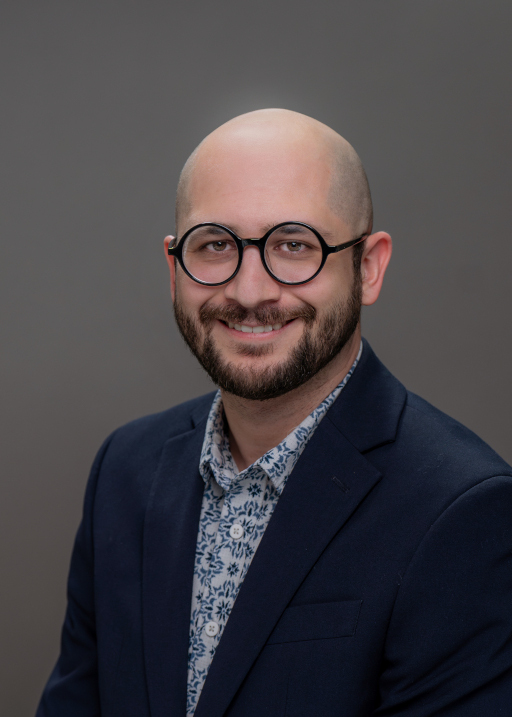
(Co-Primary Investigator) Dr. Austin Ferguson is an Assistant Professor of Computer Science at Grand Valley State University. His research uses agent-based computational modeling to empirically investigate questions in evolutionary biology theory. His recent work has focused on historical contingency in evolution, evolvability, population structure, and the evolutionary dynamics of invasive species.
Dr. Alexander Lalejini
(Lead Mentor) Dr. Alexander Lalejini is an Assistant Professor in Computer Science at Grand Valley State University. Dr. Lalejini's research intersects computer science and evolution, applying the principles of each field to advance the other. Broadly, his work focuses on (1) developing digital systems to investigate fundamental questions about how evolution works and (2) harnessing our understanding of evolution to engineer new search algorithms.

Dr. Byron DeVries
(Lead Mentor) Dr. Byron DeVries is an expert in software engineering with research interests spanning model-driven engineering, requirements engineering, evolutionary computation, parallel processing, algorithm design, and computer science pedagogy and outreach. His work contributes to advancing methodologies that improve software development processes and performance.
Mentors
Dr. Stuart Jones
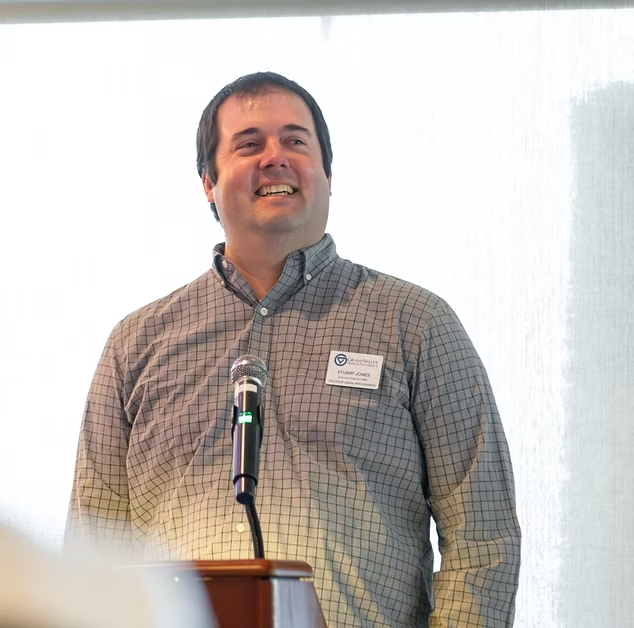
Dr. Stuart Jones is the Allen and Helen Hunting Executive Director of the Annis Water Resources Institute and an aquatic ecologist. His ideal research project leverages information across scales to advance our theoretical understanding of aquatic ecosystems and their watersheds while also providing management-relevant information or predictions. Stuart’s primary goal is to facilitate the research and careers of others and to have fun while doing so. He is happiest building simple mathematical models or at the hockey rink with his family.
Dr. Charlyn Partridge
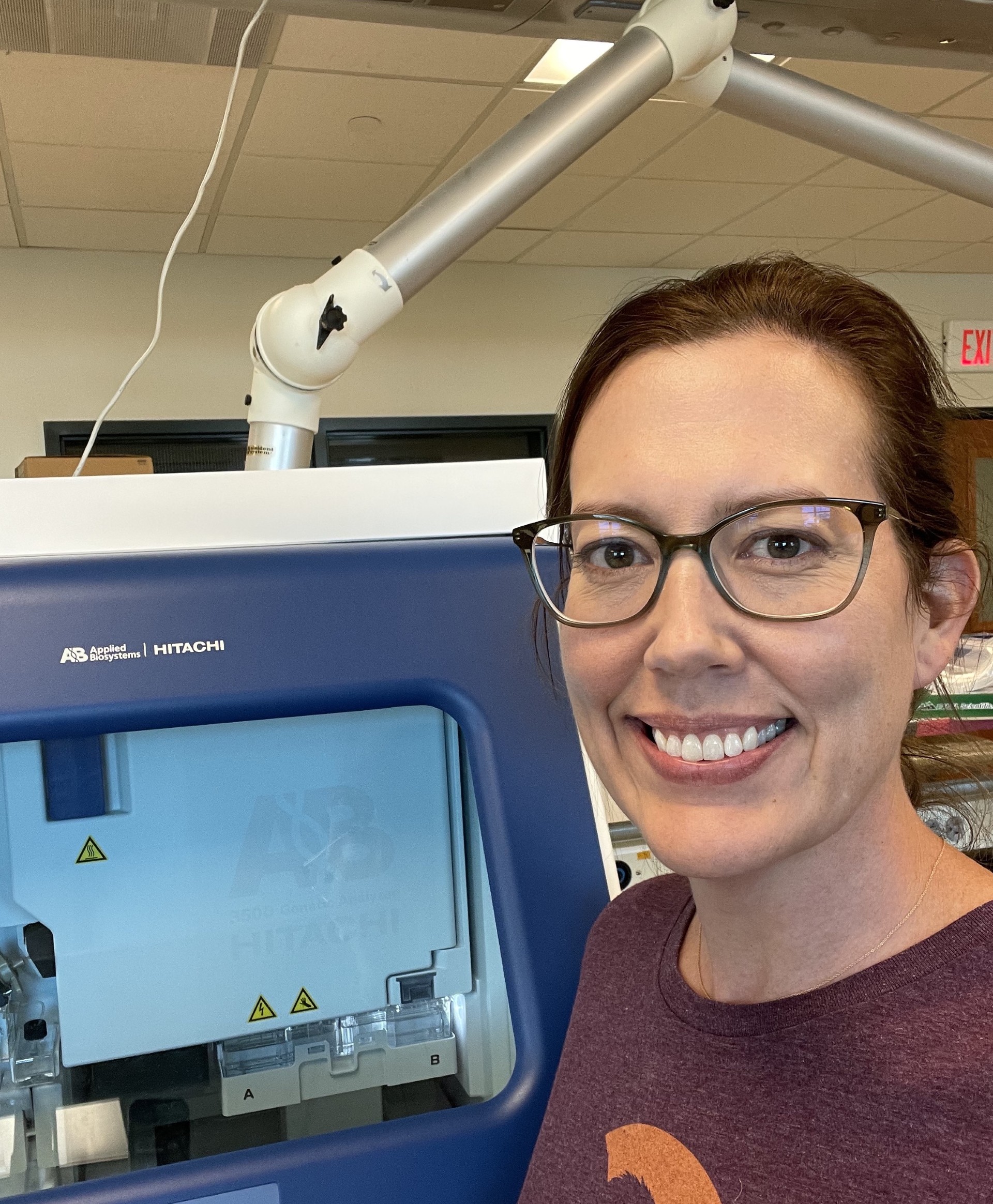
Dr. Partridge is a molecular ecologist who uses genomic tools to aid in conservation and management. Her work is focused on developing new approaches for invasive species monitoring and evaluating how invasive species rapidly adapt to new environmental conditions. Her work bridges both the applied and basic sciences so that we can better manage invasive populations while also learning about the factors driving their success.
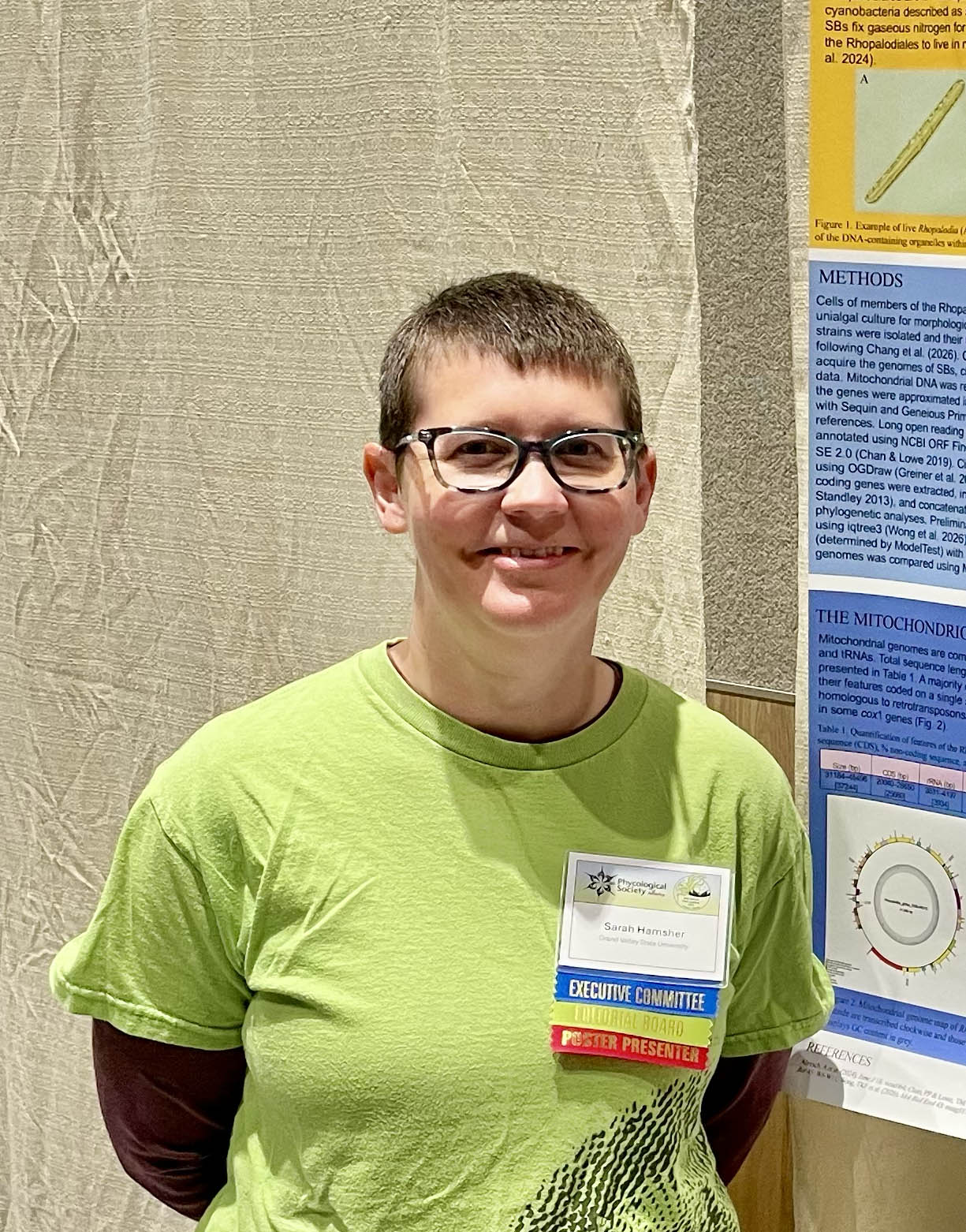
Dr. Sarah Hamsher
Dr. Sarah Hamsher studies diatom taxonomy and systematics using morphological and molecular data. She is interested in questions related to evolution, biogeography, and ecology.

Dr. Bradley Dickson
Brad Dickson develops methods for accelerated all-atom simulation of molecular processes and applied physics-based models to facilitate deeper understanding of experiment.
Attributions
- This site was based on the Pudhina template.
- Portions of this site were supported by AI-assisted code development.
️Primary Investigators: Erik Fredericks and Austin Ferguson